
Challenges
Consolidating your technology suppliers
When connectivity, telephony and IT come from separate suppliers, every fault is a question of whose it is. We are one owner-managed provider on our own network, with one number to ring.
The challenge
The internet drops and the broadband supplier blames the router, the IT company blames the line, and the phone provider says it is nothing to do with them. Three contracts, three renewal dates, three numbers to ring, and the fault is still there. Bringing them together is as much about accountability as it is about cost.
If it is left
A phone fault that is really a broadband fault bounces between suppliers for days; a Microsoft 365 change that needs a firewall rule waits for two companies to agree whose job it is; three renewals roll over on three dates at three prices nobody compared. Your own staff become the project managers, holding the ticket numbers and chasing, which is work you did not hire them for.
What good looks like
Connectivity, telephony, IT and security from one owner-managed provider that runs its own business-only network, so a fault is never a question of whose it is. One contract, one monthly report of where the hours went, one number answered within three rings, and a director you can ask for at any time. Services come across in an order that fits your contract dates, each one when it is ready, and nothing moves before it is proven.
What to do first
Before you call anyone
Make the list
Every line, number, licence, device, domain and contract, who supplies it, what it costs and when it renews. Most businesses find more suppliers than they expected, and at least one contract nobody remembers signing.
Find the renewal dates and notice periods
They set the order. A line with eighteen months to run moves last; a support contract renewing next month moves first, or is given notice now.
Check what is in your name
The domain, the Microsoft 365 tenant, the phone numbers and the broadband should be registered to the business, not to a supplier. Fix that before anything else moves.
Write down the last three faults
What happened, who you rang, how long it took and who finally fixed it. It is the clearest brief for what you want to be different.
What we would do first
-
List what you have and who supplies it
Every line, number, licence, device and contract, with its renewal date, so the move can be planned around them.
-
Decide what moves and when
Services brought across in an order that fits your contract dates and your operations.
-
Move each service when it is ready
Numbers ported, devices brought under management, connectivity moved onto our own business-only core network.
-
One number, one team
Connectivity, telephony, IT and security from one owner-managed provider, answered within three rings, with a director you can ask for at any time.
How we approach it
-
Audit every contract
The list completed with us: lines, numbers, licences, devices, domains and contracts, who holds what, and the renewal dates and notice periods that set the order of the move.
-
Plan the order
Usually IT support first, because the service desk can then manage the rest of the move; then the phone numbers ported to hosted voice or Teams; then broadband and leased lines onto our own network as their contracts allow; security layers added as the devices come under management.
-
Move one service at a time
Each service set up and tested before the old one is ceased: devices and users under management, numbers ported on agreed dates, circuits live before the old line goes, nothing moved on the day of a renewal panic.
-
Consolidate the contract
One retainer sized to the whole estate, with the circuits, the phone system and the security tools as monthly charges on the same invoice, and one monthly report.
-
Run it as one
One number for every fault, answered within three rings by an engineer who can see the line, the phones and the devices, and a director reachable at any time.
The services that apply
-
IT & Cloud
Managed or co-managed IT is usually the first thing to move, because the service desk then manages the rest of the consolidation.
-
Connectivity
Broadband and leased lines moved onto a core network we own and run, so when a line fails there is nobody else to blame and the people who answer can see it.
-
Voice and video
The phones, hosted or Teams or Mitel, run over the same connection and are supported by the same desk, which removes the commonest bounce between suppliers.
-
Cyber security
Email filtering, endpoint protection and firewalls under the same team as the devices and the network, so a security change is never two companies' problem.
How you would buy it
Every hour we work falls under one of four engagement models. These are the ones that fit this situation; How we work compares all four.
-
02
Fixed price
A defined piece of work or project
The consolidation itself is a project, surveyed and priced as a fixed sum before we start, with a project manager owning the order and the dates.
-
03
Retainer
The way most of our clients work with us
One retainer sized to the whole estate replaces the separate support contracts: hours each month at one rate whoever does the work, a cap you set, and the circuits and phone system as monthly charges on the same invoice.
Who you would work with
An account manager
Owns the relationship across every service: the contract dates, the order of the move and the review when the monthly report shows a pattern.
A project manager
Runs the move service by service, with the porting dates, the circuit orders and the old suppliers' notice periods.
The service desk
One number answered within three rings by engineers who can see the line, the phones and the devices together.
A director
Reachable at any time, no questions asked, when something needs taking higher than the service desk.
A client who has been here
-
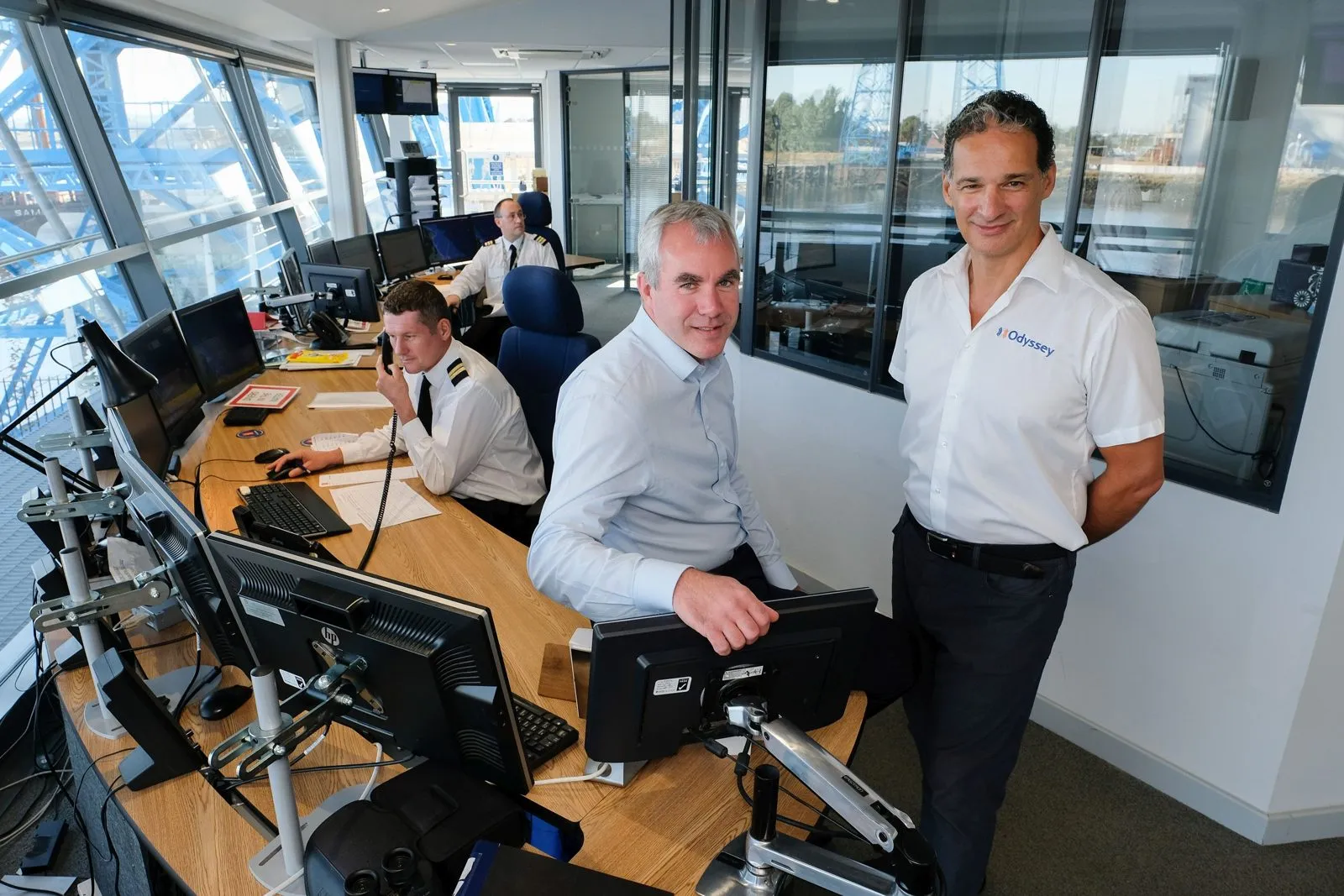
Client story, Logistics and ports
PD Ports
A two-year overhaul replaced several telephony suppliers with one Mitel MiVoice Business system across PD Ports' sites.
Read the story →
Questions people ask
Is one supplier a risk in itself?
It concentrates the relationship, so the supplier needs checking. Odyssey has been owner managed and debt free since 1987, runs its own core network rather than reselling someone else's, puts its service commitments in writing and measures them live, and lets you escalate to a director at any time.
Do we have to move everything at once?
No. Services are brought across in an order that fits your contract dates and your operations, and each one moves when it is ready. Some businesses take a year to bring everything over.
What about contracts with a long time to run?
They run on until they can be moved without paying twice for longer than necessary, and we tell you which those are before you commit. The audit sets the order; nothing is rushed to suit us.
Who do we call when something goes wrong after the move?
One number. Connectivity, telephony, IT and security come from one provider, a person answers within three rings, and you can ask for a director at any time.
Is your connectivity resold from another provider?
No. It runs on our own business-only core network, with our own autonomous system and equipment in London and Manchester, and we interconnect with the major carriers for the last mile.
Will it cost less?
Often, because three suppliers' margins become one and three contracts' renewals get compared for the first time, but the main reason to do it is accountability. We show you the current total against the consolidated one before you decide.
Have you brought another business onto one supplier?
Yes. PD Ports relied on several suppliers for telephony across its sites. We replaced them with one Mitel MiVoice Business system, now managed by one locally based supplier, with costs reduced through measures we put in place.
Talk to a human about consolidating your suppliers
Call and we answer within three rings. Or tell us what you need and we will call you back at any time.